Reentry Simulation – Reflections
I was eager to participate in the Reentry Simulation, which has been held in cities across the nation and throughout our state. I finally had the opportunity to take part in the simulation at UofL.
I already knew how difficult reentry can be after watching a loved one leave prison following 17 long years. Even though he was a bright young man with tremendous family support, the transition was still difficult. The “deer in the headlights” look was common as he tried to put his life back together. We could not imagine what the experience would have been like without family support or the financial resources needed to reintegrate into society.
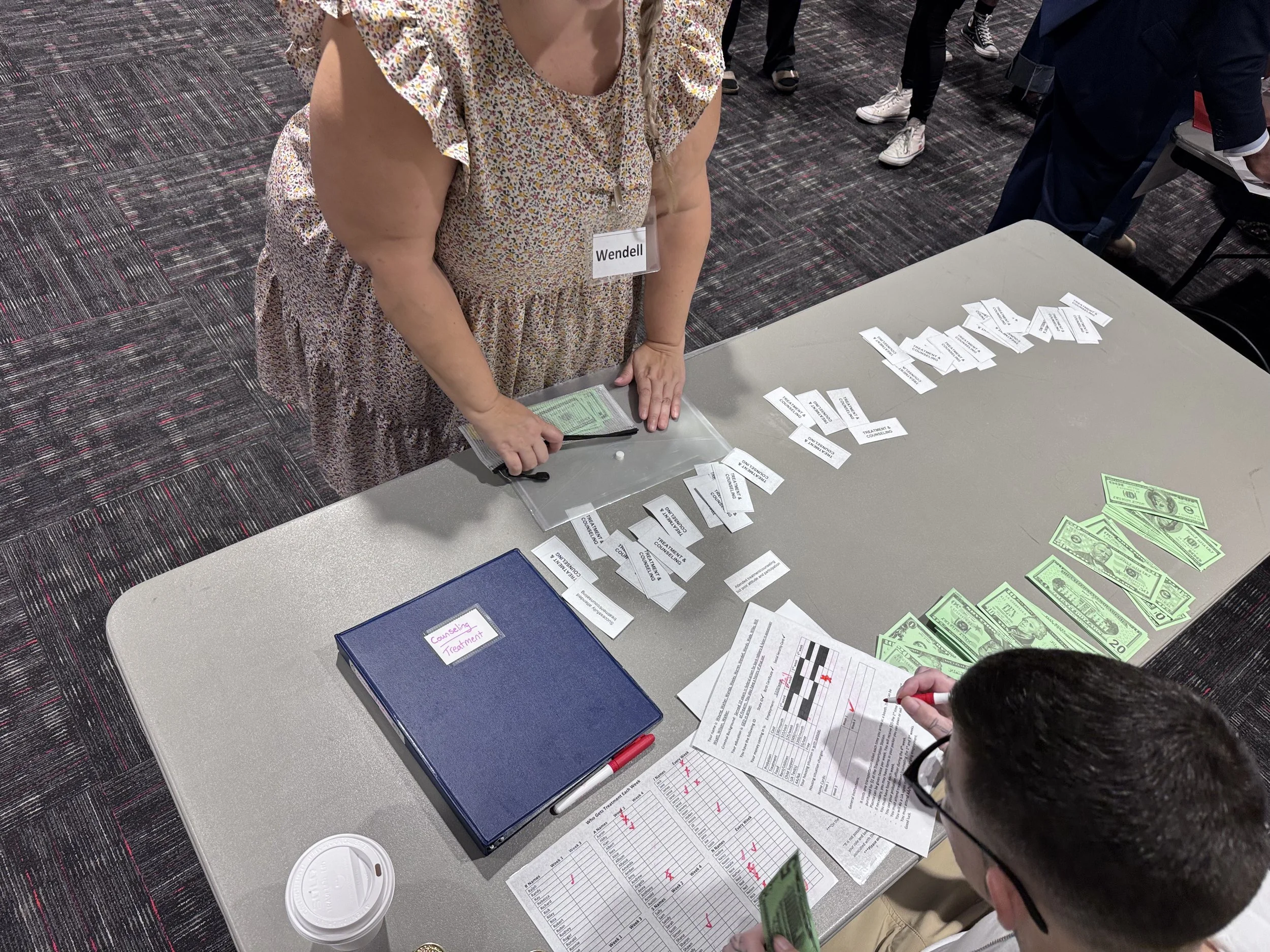
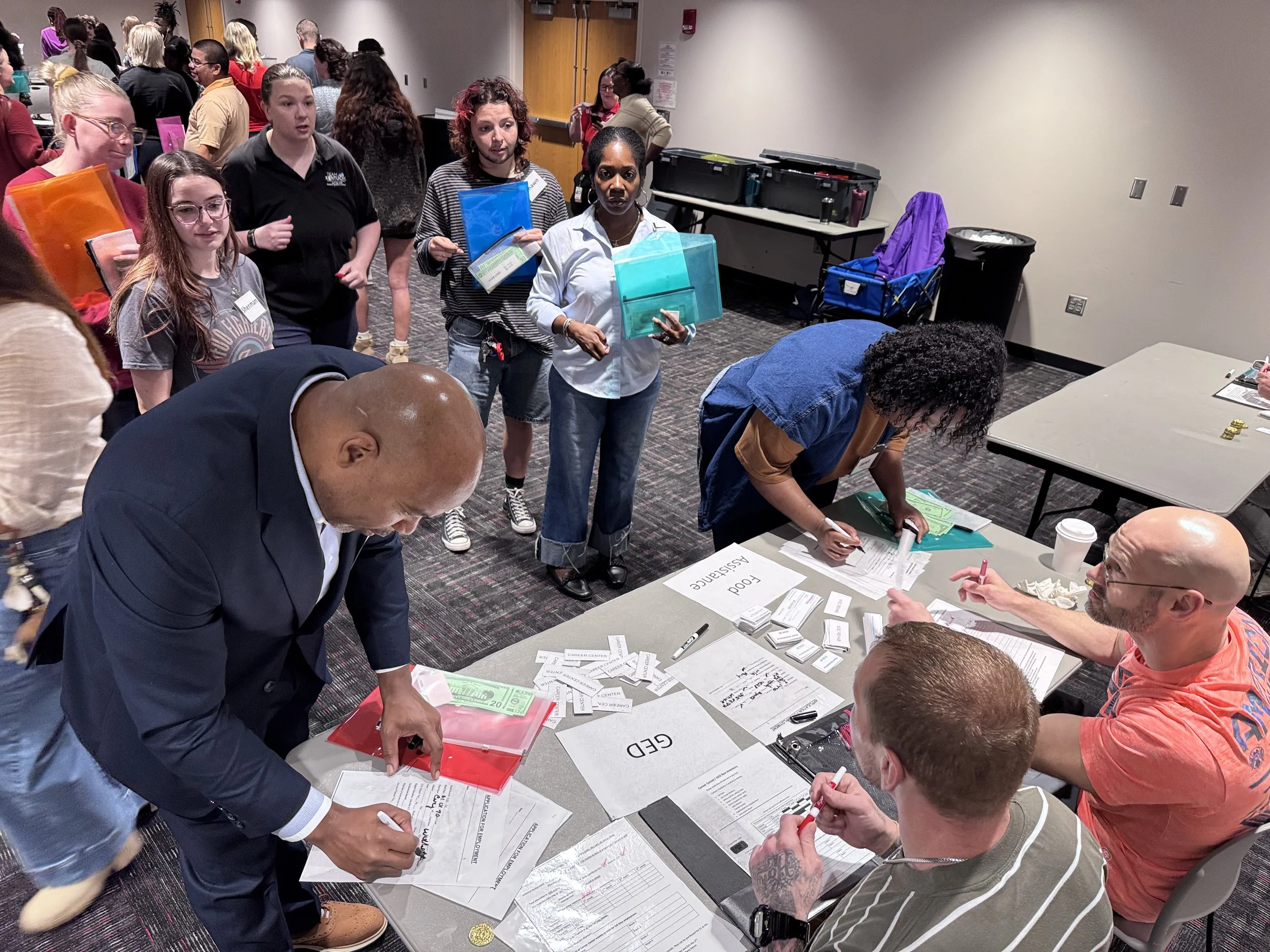
Observing the Reentry Simulation gave me an invaluable opportunity to interview participants and understand how the event was organized. To my surprise, the people staffing the tables around the room were incarcerated individuals. They were living in a downtown halfway house awaiting release from custody in the coming months. Some told me they had previously left prison, later recidivated, and personally faced the same gauntlet represented in the simulation:
o obtaining identification,
o accessing treatment,
o checking in with a parole officer,
o paying restitution,
o securing food and housing,
o responding to unexpected challenges,
o attending counseling,
o court visits,
o navigating social services,
o participating in AA/NA meetings,
o completing drug tests, arranging transportation,
o finding a job,
o donating plasma for cash,
o and more.
Many tasks were sequential; completing one incorrectly or out of order cost participants both money (tokens) and time. Many returning citizens lack meaningful family support while navigating a system strained to its limits even on its best days.
The simulation therefore created a striking reversal of roles: free people/ social workers, and students had to obtain tokens, coupons, and approvals on their assignment sheets from incarcerated individuals who are part of the very system being simulated and who have faced—or will face—the daunting process of rebuilding their lives in the community.